NSA Codebreaker 2025 - Task 1: Getting Started
Finding a suspicious artifact in an EXT2 image
On this page
You arrive on site and immediately get to work. The DAFIN-SOC team quickly briefs you on the situation. They have noticed numerous anomalous behaviors, such as: tools randomly failing tests and anti-virus flagging on seemingly clean workstations. They have narrowed in on one machine they would like NSA to thoroughly evaluate.
They have provided a zipped EXT2 image from this development machine. Help DAFIN-SOC perform a forensic analysis on this - looking for any suspicious artifacts.
Downloads
- zipped EXT2 image:
image.ext2.zip
Task
- Provide the SHA-1 hash of the suspicious artifact.
Writeup
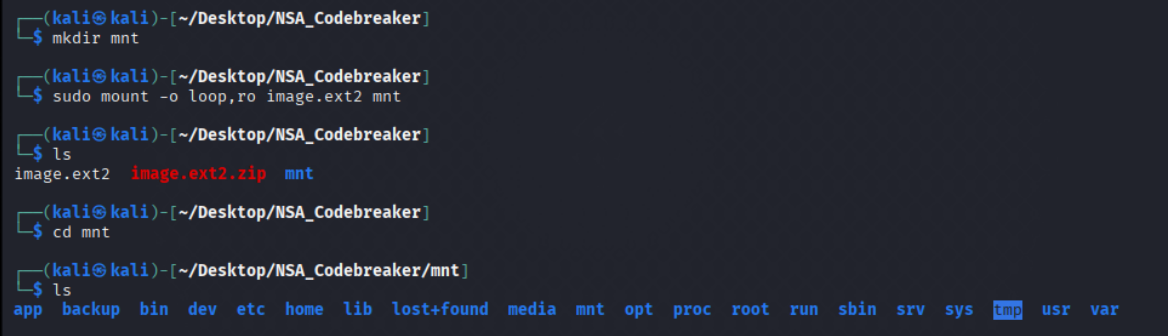
I started by mounting the EXT2 image in read-only mode so I could safely explore its contents.
The first place I looked was the root user’s .bash_history, since that often tells the story of what happened on the system. The history revealed a pattern: lots of local network probing (using curl, wget, nc, netstat, etc.), checks against DNS, and even repeated calls to http://localhost/app/test. Mixed in were commands to mount /dev/sdb1 to /mnt/usb and edits to the crontab. In other words, whoever was on this box was hammering on a local web service, staging files via USB, and attempting persistence through cron.
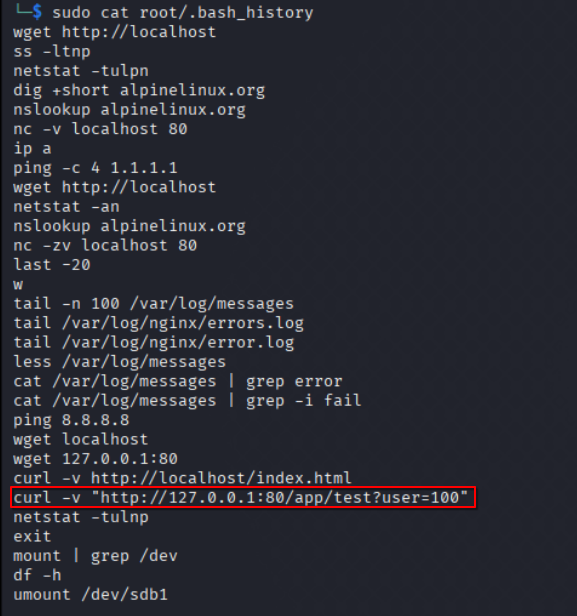
With /app/test as a pivot point, I ran a grep-ed through the filesystem. This led me to an odd discovery:

/etc/terminfo/s/nsuvzemaow
This terminfo file references /app/www. That’s a red flag - terminfo directories are supposed to store compiled terminal capability files, not random application paths. The filename itself looked odd too.
To confirm, I calculated the SHA-1 hash of the file:
0068e0c3cba711e775fa374b201d5d04ffcef96c
Success! My first ever NSA Codebreaker challenge complete.